
Guide
India gives you two ways in for treatment. One is the online e-Medical visa. The other is a regular medical visa from the Indian embassy or high commission in your country, which most people simply call the "embassy visa".
Either one lets you be treated here. What differs is how you apply, who is allowed to use each, and how much room it gives you once you are in India. Below, the e-Medical visa vs the embassy visa for India, side by side, so you can pick before you start.
e-Medical visa vs embassy visa: the short answer
If your nationality is on India's e-Visa list and your treatment fits inside the e-Visa's validity, the e-Medical visa is usually the easier one: it all happens online, with no office visit. If your country is missing from the list, or treatment may run long, go the embassy route.
Online, at indianvisaonline.gov.in
Online form, then papers and passport to the Indian mission
Only nationalities on the e-Visa list
Any nationality
No, it is all by email
Usually yes, often by appointment
Up to two e-Medical Attendant visas
Medical attendant visas, linked to the patient's visa
Not possible
Can usually be extended in India through e-FRRO
Only listed airports (Delhi is one)
Any authorised immigration checkpoint
Is your country on the e-Visa list?
Answer this first, because everything else follows from it. In October 2026 we checked the eligible list on the official e-Visa website for the countries most of our patients come from:
| Country | On the e-Visa list (October 2026) | Your route |
|---|---|---|
 Kenya | Yes | e-Medical visa online, or the High Commission in Nairobi |
 Ghana | Yes | e-Medical visa online, or the High Commission in Accra |
 Oman | Yes | e-Medical visa online, or the Embassy in Muscat |
 Bangladesh | Yes | e-Medical visa online, or the Indian visa centres (IVAC) |
 Nigeria | Not on the list | The High Commission in Abuja or the Consulate in Lagos |
 Ethiopia | Not on the list | The Embassy of India in Addis Ababa |
The list does change, so check it yourself on the day you apply; it sits on the official e-Visa page under the countries eligible for e-Visa. If your country is missing, the online e-Medical visa is not open to you, however urgent the case, and you apply through the Indian mission.
When the e-Medical visa is the better choice
Most planned treatment, such as a joint replacement, heart surgery or a cataract operation, fits the e-Medical visa well. A knee replacement, for example, usually means 10 to 14 days in India, and bypass surgery 14 to 21 days.
Applying online really is easier. From home, you upload a passport scan, a photo and the hospital letter, and the answer comes by email. The official website lets you apply up to 120 days before arrival and no later than 4 days before it. Your two attendants can apply on the same day.
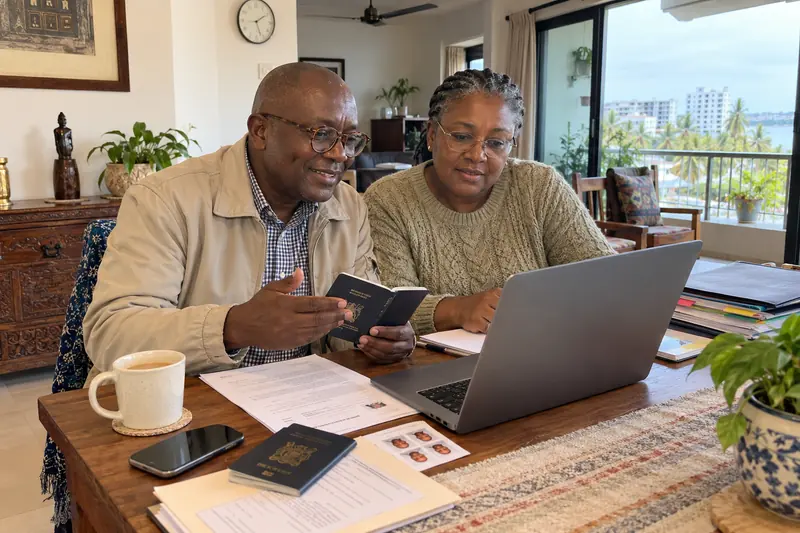
Read the official page closely on validity. When we checked in October 2026, it listed the e-Medical visa as multiple entry, and its questions section gave 60 days from your first arrival. What counts is the dates printed on your own approval.
Coordinator's tip: Do the patient's and both attendants' applications on the same day, with the same hospital letter in front of you. When visas come through days apart, families usually end up moving their flights.
When to apply at the embassy or high commission instead
Three common reasons push people to the embassy route, even when they could apply online.
Your country is not on the e-Visa list. Today that is the case for patients from Nigeria and Ethiopia. You still fill in the application form online at indianvisaonline.gov.in, then take it with your papers and passport to the Indian mission.
Your treatment may be long. A living donor kidney transplant usually means 4 to 8 weeks in India, and a liver transplant 2 to 3 months. Cancer care can mean several trips across months. A regular medical visa can be extended inside India through the Foreigners Regional Registration Office (FRRO); an e-Visa, the official website says, can be neither extended nor converted.
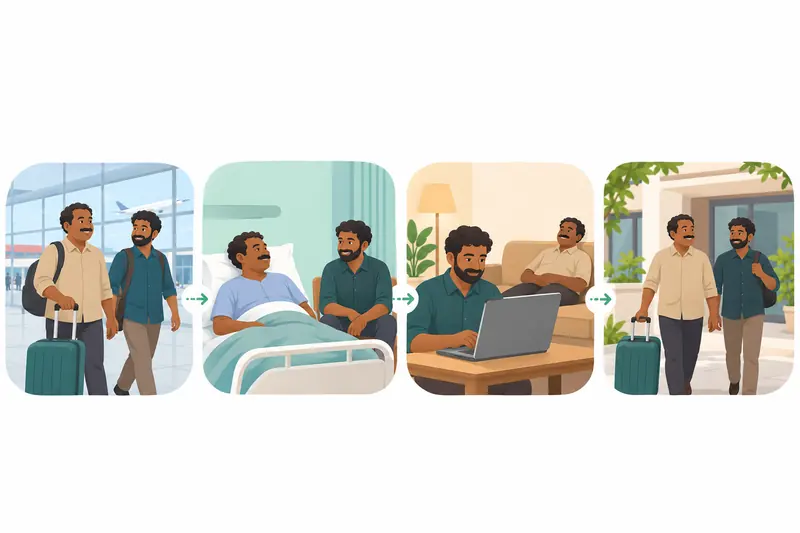
Your case needs a donor or extra papers. Transplants also need the donor's documents and approval steps. Missions handle these papers in person, and some ask for extra forms.
The embassy visa comes with its own rules. Indian missions say a stay of more than 180 days on a medical visa must be registered with the FRRO within 14 days of arrival. The attendant visa runs for as long as the patient's.

Fees, extensions and changes of plan
Fees differ by route and by nationality, so we do not quote them here. The official e-Visa website publishes its fee table by country and adds a bank charge, and the fee is not refunded if the visa is refused or you cancel. Each Indian mission lists its own fees for regular visas.
Plans do change. A test shows something new, the surgeon wants you to rest longer, or a second operation is needed. This is where the two routes differ most.
Common mistakes:
- Not true: You can turn an e-Medical visa into a longer visa once you are in India. The official website calls an e-Visa non-extendable and non-convertible. If a long stay is likely, go the embassy route from the start.
- Not true: An agent can get you a faster appointment. Indian missions warn that no money is owed to anyone except the mission or the official website. Anyone offering a fast-track visa for a fee is a tout.
- Not true: The attendant can follow later on a tourist visa. An attendant should travel on the medical attendant visa linked to the patient's visa. Apply for both together.
Unsure which route fits your treatment? Ask before you apply, not after a refusal.
Arriving in India on each visa
The e-Medical visa works only at the airports and seaports listed on the official website. Delhi, Mumbai, Chennai, Hyderabad and Bengaluru are all listed, so for treatment in Delhi NCR it rarely matters. The embassy medical visa works at any authorised immigration checkpoint.
Whichever visa you hold, carry the printed approval or visa, the hospital letter and your health certificates. Travellers from yellow fever countries, Nigeria, Kenya, Ethiopia and Ghana among them, need their vaccination card.
- DhakaAbout 2.5 hoursDirect
- MuscatAbout 3 hoursDirect
- Addis AbabaAbout 5.5–6 hoursDirect
- NairobiAbout 7.5 hours direct, or one stopDirect or 1 stop
- AccraLonger, via a hub1 stop
- Lagos11–15 hours1 stop
Usual times. Routes change, so check current flights when you book.
What stays the same on both routes
On both routes, everything rests on the letter from the Indian hospital. Its International Patient Department writes it on the hospital's letterhead, naming you, your passport number, your illness, how long treatment should take and, for missions, an estimated cost. A doctor must review your reports before the hospital can write it, so that review always comes first.
Your passport needs at least six months of validity, and every traveller applies separately, children too. Indian missions also want proof that you can pay for treatment and your stay, such as a recent bank statement, plus a referral letter from your own doctor.
Attendants are handled the same way on both routes. Indian missions say the medical attendant visa usually goes to a husband or wife, a child or another blood relative, and runs for as long as the patient's visa. If someone who is not a blood relative is coming, ask the mission first: some want the patient to sign an undertaking.

When you arrive, the hospital's international desk checks that your visa, passport and hospital letter all match. Bring the printed approval, or the passport with the visa in it, depending on your route.
How to choose your route in three questions
Most families can decide in a few minutes:
- 1Is your nationality on the e-Visa list?
If not, go to the Indian mission. If it is, carry on.
- 2Will treatment and follow-up fit inside the e-Visa?
Ask your doctor how long you are likely to be in India. A long or uncertain stay points to the embassy.
- 3Is everyone's passport ready?
Patient and attendants apply together, each with at least six months left on their passport.
Our part is to help you choose the route, ask the hospital for the letter and check your papers. We are not a hospital or a visa office, and the visa decision belongs to the Government of India.