
Travelling to India for treatment: your complete guide
Getting surgery abroad is about more than medicine. We help you feel safe and supported at every step, from your first report to your flight home.
No cost to you · Reply within 24 hours · JCI & NABH hospitals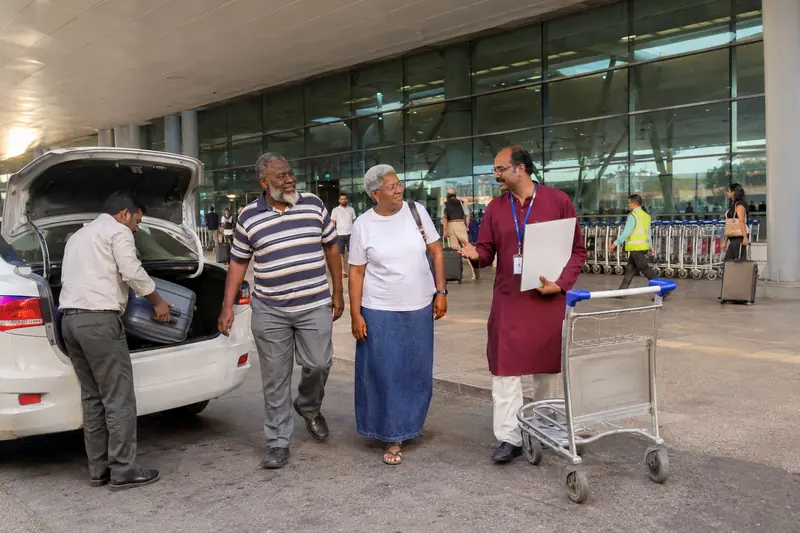
Where our patients come from
West Africa


East Africa
 Kenya7.5 hours to Delhi
 Ethiopia5.5–6 hours to Delhi
 Tanzania11–15 hours to Delhi
 Uganda10–14 hours to Delhi
 Sudan10–16 hours to Delhi
 Somalia10–15 hours to Delhi
 Rwanda10–15 hours to Delhi
Central & Southern Africa
 Zambia12–17 hours to Delhi
 Zimbabwe13–18 hours to Delhi
 Cameroon13–18 hours to Delhi
 DR Congo12–17 hours to Delhi
Middle East
 Oman3.5 hours to Delhi
 Iraq4–5 hours to Delhi
 Yemen8–14 hours to Delhi
 United Arab Emirates3–4 hours to Delhi
 Saudi Arabia4–5 hours to Delhi
 Kuwait4–5 hours to Delhi
 Qatar4 hours to Delhi
 Bahrain4 hours to Delhi
South Asia
 Bangladesh2.5 hours to Delhi
 Nepal1.5–2 hours to Delhi
 Afghanistan2 hours to Delhi
 Maldives4–4.5 hours to Delhi
 Sri Lanka3.5 hours to Delhi
Central Asia


Southeast Asia

North America


Europe

Oceania


Patients from every country are welcome. Not in the list? to see your visa route and costs in your own money.
Why patients travel to India for treatment
Patients come to Delhi NCR from the Gulf, Africa, South Asia and beyond, for accredited care at a lower cost.
For self-paying patients, planned surgery here often costs 60–80% less than private care in Europe, the UK or North America. How costs compare
Accredited partner hospitals in New Delhi and Gurugram, with international patient desks.
Experienced doctors across 15 specialties review your reports before you travel.
Most nationalities apply online, with hospital invitation letters. Direct flights reach New Delhi from cities such as Dhaka and Addis Ababa.
Your reports come first
- Step 1Send your reports
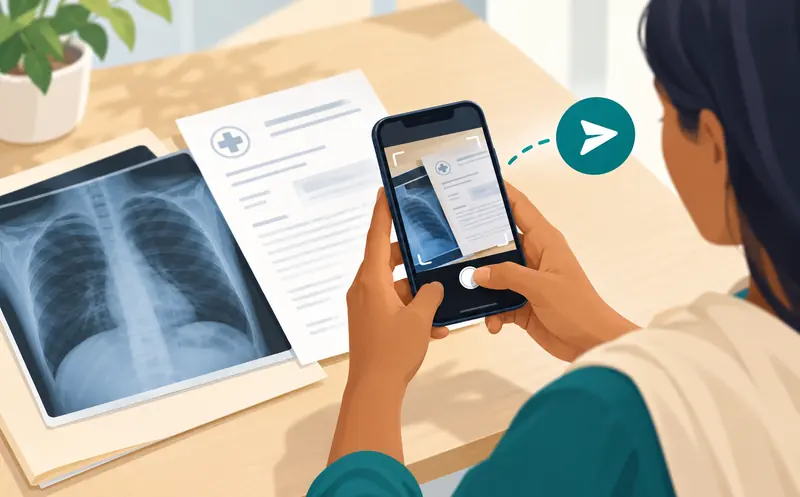
Recent tests, scans, doctor's notes or biopsy reports, here or on WhatsApp.
- Step 2A specialist doctor reviews them

They look at whether treatment is suitable and which approach fits.
- Step 3You get a written plan

Expected hospital stay, recovery time in Delhi and a written estimate from the hospital.
The visa in four steps
- 1Document review
Share your reports. We confirm your case is ready for hospital review.
- 2Hospital invitation letter
An official, stamped letter on the treating hospital's letterhead.
- 3Apply for the visa
You apply online for the e-Medical visa, or through the Indian embassy.
- 4Approval and travel
Once the visa is granted, we confirm your flight and arrival plans.
Patient and family
- The patient travels on a medical visa (MED)
- Up to 2 family members can travel on a medical attendant visa (MED-X)
- Many nationalities can apply online for the e-Medical visa
- If recovery takes longer, we help you ask for a visa extension
Visa decisions are made by the Government of India. We provide supporting documents but can't guarantee approval.
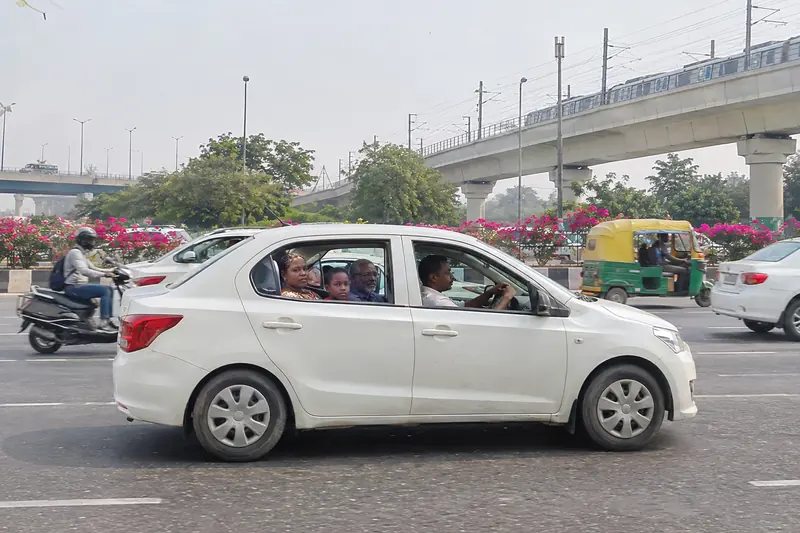
From the airport to the hospital
- Land in Delhi

Indira Gandhi International Airport (DEL), Terminal 3.
- Your coordinator meets you
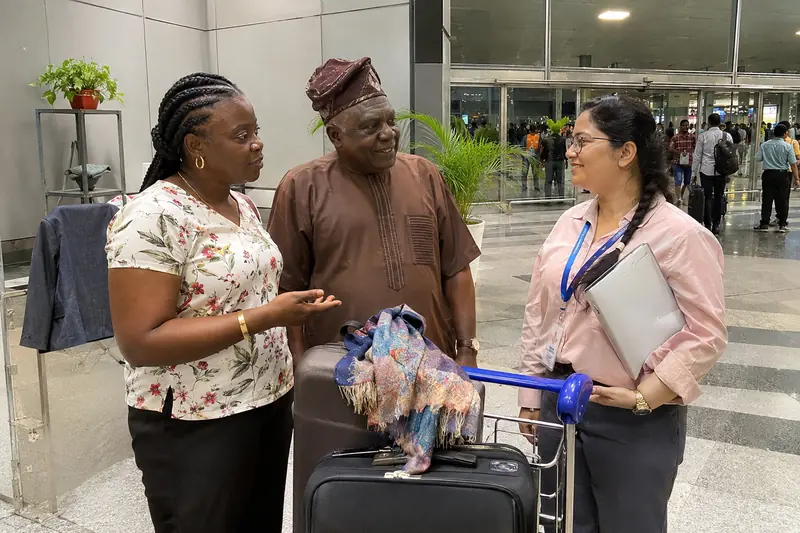
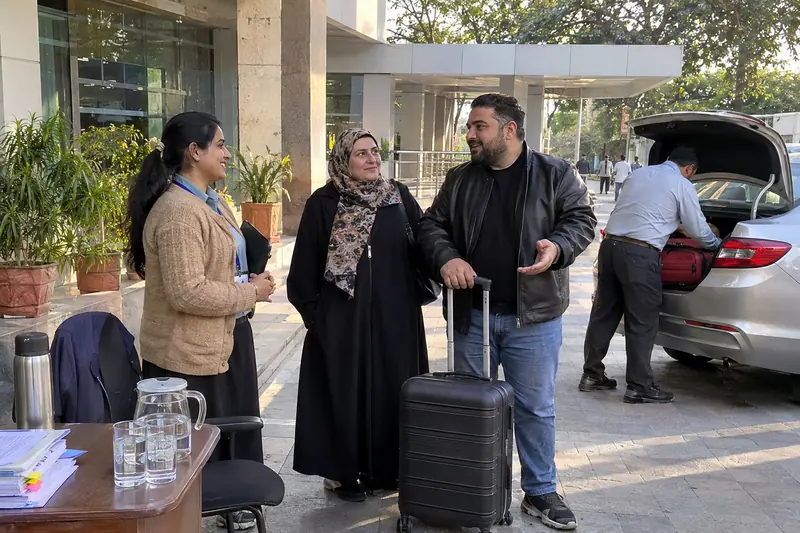
Pickup with a name board. You don't find your way alone.
- Transport arranged

A wheelchair or medical transport when you need it.
- Hospital or stay
Straight to your hospital or your accommodation.
Near your hospital
- Serviced apartments with kitchens, so you can cook familiar meals
- Clean guest houses close to the hospital
- Wi-Fi, lifts and 24-hour security
- Options to suit your budget
You won't be on your own
- Hospital rooms have space for a family member to sleep
- Language help, including Arabic, French and Swahili
- Help with a local SIM card and changing money at official rates
- Your coordinator stays in touch throughout your hospital stay

Recovery and follow-up
After discharge you stay nearby for dressings, physiotherapy and follow-up tests.
Your treating team advises when it's safe to travel and gives you discharge documents.
Video follow-ups with your specialist can be arranged after you return home.
Common questions from international patients
How does medical treatment in India work for international patients?
You send us your medical reports. A specialist at an accredited hospital in Delhi NCR reviews them and suggests a treatment plan with a written estimate. Once you agree, the hospital gives you a letter for your medical visa. You come with one or two family members, someone meets you at Delhi airport, and you have your tests and treatment. You then recover nearby and get a fit-to-fly check before going home. Follow-up carries on by video call or WhatsApp.
Why do patients travel to India for treatment?
Mostly cost and waiting time. For self-paying patients, planned surgery at an accredited private hospital in India often costs 60–80% less than private care in the UK, the US or the Gulf, and there is usually no long wait. Delhi NCR has large JCI and NABH accredited hospitals, and their senior specialists treat many international patients every year.
Which treatments do international patients most often come to India for?
The common ones are knee and hip replacement, heart bypass surgery, cancer surgery, spine surgery, kidney and liver transplants from a living family donor, weight-loss surgery, IVF, cataract surgery and cochlear implants. Each treatment page shows the usual cost, how long you need in India and how many days you spend in hospital.
Is it safe to have surgery in India?
Accredited hospitals in Delhi NCR work to the same international standards (JCI and NABH) as accredited hospitals elsewhere, and their specialists are very experienced. Most of the real risk comes from the travel: flying too soon after surgery, blood clots on long flights, and follow-up once you are home. So pick an accredited hospital, share your full reports before you travel, stay long enough to recover, and plan follow-up with your own doctor. Our guide on safety goes through each step.
How do I choose a medical travel facilitator in India?
A good facilitator works only with accredited hospitals and tells you which hospital and doctor will treat you. It gets you a doctor's written opinion and a cost estimate before you travel. It is open about how it is paid (most are paid a fee by the hospital, which should not be added to your bill), it never asks you to pay it for the treatment itself, and it gives you a real person to talk to. That is how Optimist Healthcare works: our service costs patients nothing, you pay the hospital directly, and you can choose any of our partner hospitals.
How much does treatment in India cost?
That depends on the treatment, your condition and the hospital. Each treatment page shows the usual price range at accredited hospitals in Delhi NCR, and our cost page compares prices with the UK, the US and the Gulf. The exact amount comes from the hospital as a written estimate, after a doctor has reviewed your reports.
Do I need a visa for medical treatment in India?
Yes. Most nationalities apply online for an e-Medical visa using the hospital's letter. Some, for example Nigeria and Ethiopia, apply for a Medical visa at the Indian embassy instead. One or two family members can come with you on attendant visas. We send you the hospital letter you need.
How long will I need to stay in India?
Usually one to four weeks, depending on the treatment. Plan on about 10 to 14 days for a knee or hip replacement, two to three weeks for heart bypass surgery, and longer for a transplant. Each treatment page shows the usual time in India and the days in hospital.
Do you help with medical visa documentation?
Yes. Embassy paperwork can be confusing, so we arrange it with the hospital. You get official invitation letters for the Medical Visa (MED Visa) and the Medical Attendant visa (MED-X), on hospital letterhead and stamped by the hospital, to use at the Indian Embassy or on the online e-visa portal.
Can you assist with airport pickup and local transport?
Yes. We arrange pickup from Indira Gandhi International Airport (DEL) in New Delhi. A checked driver, or an ambulance if the patient needs a stretcher, meets your family at the arrivals terminal and takes you safely to your hospital or your place to stay.
Can you help with accommodation for my family?
Yes. With most treatments you spend some days outside the hospital, coming back for check-ups. We point you to checked guest houses, serviced apartments with a kitchen, or hotels within 10–15 minutes of the hospital, to suit your budget and the food you eat.
Can a family member travel with me?
Yes. Under India's Medical Visa rules, up to two family members or attendants can come with each patient on Medical Attendant (MED-X) visas. Having someone you trust beside you makes the hospital days and the recovery much easier.
How long should I stay in India after my surgery?
That depends on your operation. A hospital stay usually lasts 3 to 7 days, and most patients then stay in Delhi for another 7 to 14 days for wound checks, stitch removal, physiotherapy and, where needed, a check that you are fit to fly.
What happens after I return home?
We stay in touch. We set up video check-ups with your surgeon in Delhi, send on your progress reports, and work with your local doctor on any changes to your medicines or exercises.