
Guide
Why should I verify Indian hospital credentials myself?
Because a logo on a website proves nothing. Anyone can paste an accreditation badge onto a page or drop a well-known doctor's name into a message. Fraudsters do exactly that, borrowing the names of real hospitals, doctors and medical travel companies to ask patients for money.
Luckily, India's main credentials are online and free, and one evening is enough to check them. No medical knowledge is needed, and you do not have to take anyone's word for it, ours included. Below are the three checks to make before you travel: the hospital's accreditation, the doctor's registration, and the papers you have been sent.
A genuine hospital will not mind. International patient desks get these questions every day. If someone turns vague or irritated when you ask, that tells you something as well.
Step one: how do I check a hospital's accreditation?
NABH is India's national hospital standard, run under the Quality Council of India. Some hospitals also hold JCI accreditation, which is international. Either way, outside inspectors have checked the hospital against written safety standards. For more on what each one means, see our guide on JCI and NABH accreditation.
There is one detail here that many patients miss.
Accreditation scope is the exact hospital campus, and the services inside it, that an accreditation covers. One campus of a hospital group can be accredited while another is not, so the address on the certificate has to match the address where you will be treated.
For NABH, go to the "Find an accredited healthcare organisation" search on the NABH website and pick the state and city. NABH says its directory is being updated, so if a hospital is missing, ask the hospital for a copy of its certificate. As printed on NABH certificates, you can confirm one is genuine by writing to verification@nabh.co.
For JCI, open the list of JCI-accredited organisations on the JCI website, select India, and look for the exact hospital name and city.
Whichever it is, ask the hospital for the certificate's dates. Accreditation lasts for a set period and then has to be renewed, so an expired certificate deserves more questions.
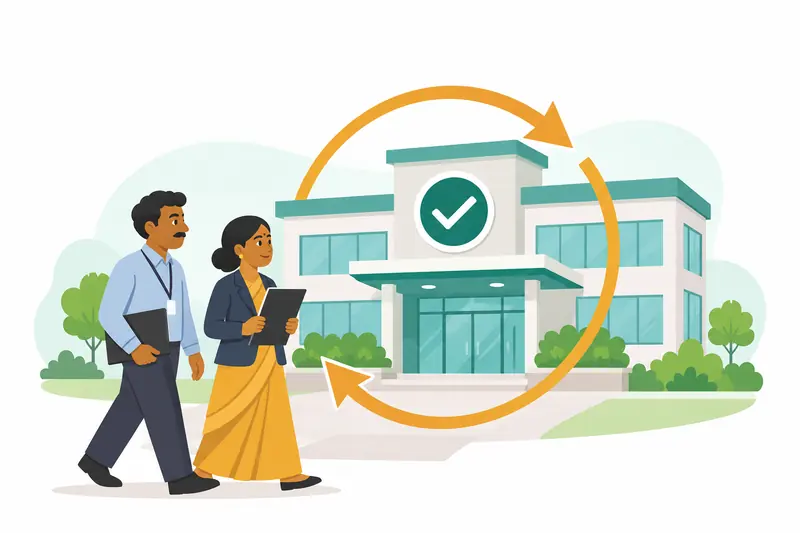
Every one of our partner hospitals has its accreditation recorded for a named campus, and you can look each one up yourself in the official directories.
Step two: how do I check a doctor's registration in India?
Indian law requires every doctor who practises medicine to be registered with the National Medical Commission or a State Medical Council. The Indian Medical Register, published by the National Medical Commission, lets you search those records by name, registration number, year of registration and state medical council.
Many doctors share a name, so search by registration number when you can. Ask the hospital for the doctor's full name, registration number and the council that registered them. A genuine hospital sends these straight away.
- 1Ask for the full name and registration number
Ask which state medical council registered the doctor, too.
- 2Search the Indian Medical Register
Try the registration number first, then the name to compare.
- 3Match the details
Name, council and qualifications should match what the hospital told you.
- 4Ask about experience with your treatment
How often does the doctor do your operation, and who looks after you afterwards?
The letters after a doctor's name can be confusing. MS and MD are postgraduate degrees. MCh and DM are higher, super-specialist degrees, for example in heart surgery or kidney medicine. DNB is a qualification from India's National Board of Examinations. Your written opinion should name the doctor and list these qualifications.
Being on the register shows a doctor is registered, nothing more. It says nothing about skill, which is why the experience question in the last step still matters.
Look at the doctor's page on the hospital's own website as well. The name, department and qualifications there should match the written opinion you received. If the doctor is not on the hospital's website at all, ask the hospital why before going any further.
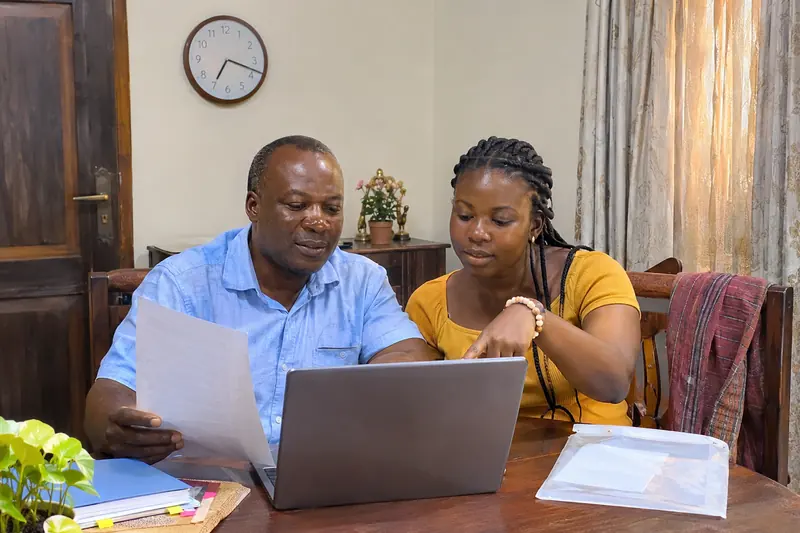
Step three: how do I check the papers a hospital sends me?
A real hospital sends its papers on its own letterhead, from its own email address. Go through each one carefully before you travel, and keep them together in one folder, on your phone and on paper.
Names the doctor and says what is wrong, what is advised and the risks for you
On hospital letterhead: stay, room, implants or medicines, and what costs extra
From the hospital, with your passport details; you apply yourself on the official e-Visa website
On the hospital's own invoice, and confirmed by the hospital before any transfer
Check the email address each paper came from. A hospital writes from its own domain, the part after the @, and that matches its official website. Free email accounts are a warning sign. In doubt? Find the hospital's phone number on its official website, not in the message, and call to ask.
A logo on a web page
The exact campus in the NABH or JCI directory
A photo and a job title
The registration number in the Indian Medical Register
A number in a chat message
An itemised estimate from the hospital's own email
Any account sent in a chat
The hospital's own account on its official invoice
What questions should I ask the international patient desk?
Big hospitals have an international patient desk whose whole job is answering people like you. Write your questions down and send them by email, so the answers come in writing. A short list is enough; tick each one off as the replies arrive.
Quick, clear answers are a good sign. Slow or vague ones are worth noting, especially when they come with pressure to pay or book.
How do I check an agent or facilitator?
Plenty of patients first hear about a hospital through an agent or a facilitator company. Some are honest and helpful, some are not. Hold them to the same rules: you should be able to speak to the hospital directly, see the hospital's own papers, and pay the hospital, not the agent.
Be careful with anyone who will not name the hospital or the doctor until you pay, or who sends a quote with no hospital name on it. A genuine facilitator is happy for you to check every detail.
Warning signs that should make you stop
Most hospitals and coordinators are honest, but some warning signs deserve attention. One alone may have an innocent explanation. Two or more together mean you should stop and check before going further.
Stop and check again if:
- Nobody will give you the doctor's registration number
- The accreditation certificate has no dates, or the dates have passed
- The certificate names a different city or campus from the one in your plan
- Your estimate comes from a free email account, not the hospital's own address
- Someone wants payment before you have seen a written medical opinion
Any message that uses our name and asks you for money is not from us. Our scam warning page, at optimisthealthcare.com/legal/scam-warning, lists our only phone number and email address.
What Optimist Healthcare does, and what you should still check
We work only with partner hospitals that hold NABH or JCI accreditation (most hold both) for the campus where you will be treated. You get the name of the specialist who reviews your reports, and your estimate comes from the hospital itself, not rewritten by us.
Please check anyway. Ask us for the doctor's registration number and the hospital's certificate, and look them up on the official sites below. Our part is to coordinate; the hospital and the doctor treat you and are responsible for your care, so you need to be sure of them.
Keep a record of your checks: Take a screenshot of each search result and note the date. If anything changes before you travel, such as a new doctor or a different hospital, check again.