Guide
A specialist in India cannot say much about your case until they have seen your reports. So when a family asks us what medical reports to send for treatment in India, we start with four papers every patient needs, then add the extra ones for common treatments such as knee replacement, heart surgery, cancer surgery and transplants.
Nobody expects you to know medicine for this. Collect the papers and scans already sitting in your cupboard or on your phone, and send clear copies. If something is missing, we will ask for it.
Which medical reports should every patient send?
Four kinds of papers, whatever the treatment. Between them they tell a specialist what is wrong, how it was found, how your body is coping and what you take every day, which is exactly what they would ask you at a first meeting.
What the problem is, when it began, what has been tried and what was advised
X-ray, ultrasound, CT, MRI or PET-CT: the written report, plus the images if you have them
The latest results, and older ones if they show a change over time
Every medicine you take now with its dose, and anything you react badly to
Your doctor's letter
Often this one short letter is the most useful page in the file, because it ties all the other reports together. No letter? Ask your doctor for a summary of your illness, or send the discharge summary from your last hospital stay.
Your other health problems
Tell us about long-term conditions too: diabetes, high blood pressure, asthma, thyroid trouble, kidney problems, and any operations you have had before. They change how surgery and anaesthesia are planned, even when they seem to have nothing to do with the main problem.

Which extra reports does my treatment need?
On top of the four basics, each treatment has a few tests of its own. The table shows what specialists usually ask for. Read it as a guide, not a rule: the doctor in India may ask for less, or more, once they see your case.
| Treatment | Scans to send | Tests and other reports |
|---|---|---|
| Knee or hip replacement | Standing X-rays of the joint, front and side; MRI if you had one | Blood count and blood sugar; any heart tests you have had |
| Heart bypass or valve surgery | The coronary angiogram images and report; echocardiogram (heart ultrasound) report | Kidney function and clotting tests; past heart attacks or stents |
| Cancer surgery | CT, MRI or PET-CT of the affected area | The biopsy (histopathology) report, with IHC results if done; past chemotherapy or radiotherapy |
| Spine surgery | MRI of the neck or lower back; X-rays taken while bending, if done | Nerve tests (EMG or NCV) if you had them |
| Brain tumour surgery | MRI of the brain with contrast dye, the images and not only the report | Hormone tests if the tumour is near the pituitary gland |
| Kidney or liver transplant | Scans of the patient, and of the donor if done | Blood group of patient and donor; kidney or liver function; tests for hepatitis and HIV |
| IVF | Pelvic ultrasound reports | AMH hormone test; semen analysis; records of earlier IVF cycles |
| Cochlear implant | CT or MRI of the inner ear | Hearing tests (audiogram, ABR); hearing aid trial records |
Heart patients
For heart surgery, nothing matters more than the angiogram. And the written report alone will not do: the cardiac surgeon wants to see the pictures of the arteries themselves, which usually come on a CD or as a download link. The echocardiogram report then shows how strongly your heart pumps.
Cancer patients
With cancer, the biopsy report confirms which type it is, and the scans show where it is and whether it has spread. Some hospitals like to re-check the original biopsy slides and tissue blocks in their own laboratory. Keep these safe and ask the lab that made them how to collect them, but do not post them anywhere until a coordinator tells you what the hospital needs.
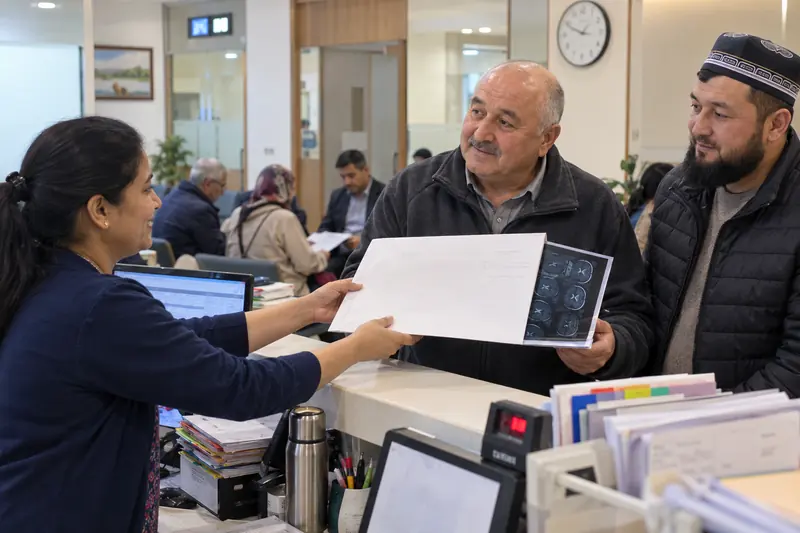
Images as well as the report: For any MRI, CT or angiogram, ask the scan centre for the image files along with the written report. Many specialists like to read the scan themselves before they give an opinion.

Transplant patients
In a kidney or liver transplant, the donor's reports belong in the file too. Send any blood group and matching tests already done for both of you. India also asks for legal papers proving how the donor is related to you. Those come later, at the travel stage, and our team explains them separately.
Where can I find my old reports?
Most families find more than they expected. Check the envelopes you were handed after each scan, the files from past hospital stays, and the lab messages and emails on your phone. Many laboratories and scan centres now send results by text message, email or an app.
Lost a report? Go back to the place that made it. Scan centres and hospitals usually keep their records and can print a fresh copy, or give you the scan again on a CD or as a download link. Ask in your own name and carry your identity card. If your family doctor sent you for the tests, their clinic may hold copies as well.
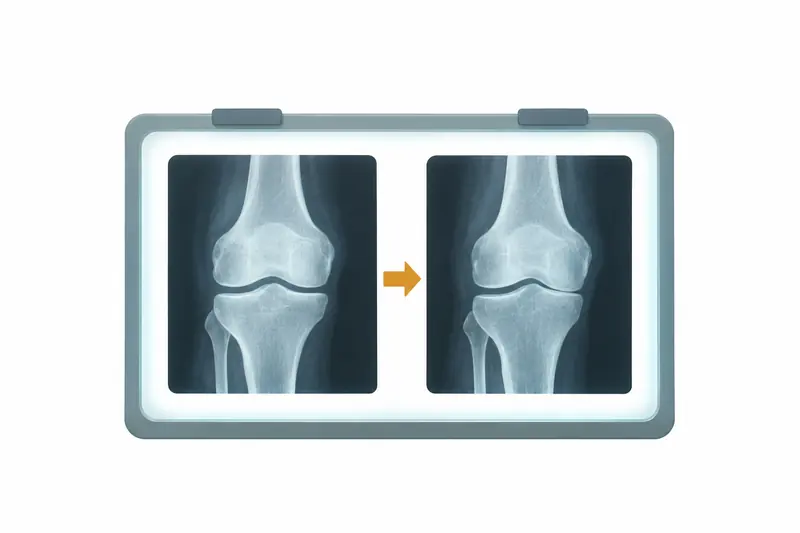
Old reports still earn their place. A scan from two years ago beside one from this month tells the doctor whether something is growing, shrinking or staying the same. Send both, and mark clearly which is the newest.
What if I do not have all my reports?
Most patients don't, and that is normal. Send what you have now instead of spending weeks collecting everything. A specialist can often say something useful from part of the file, then ask for the one or two tests that would change the plan.
A missing test is usually handled in one of two ways. Get it done at home before you fly, which saves days in Delhi. Or, if it is a simple test, let the hospital in India do it when you arrive. Some tests are repeated before surgery anyway, so the doctor decides which ones are worth doing at home.
Reports in Arabic, Amharic, Bengali or any other language still help. Scan images need no translation at all. For written reports, an English version or summary speeds up the review; the practical guide on scans and lab tests shows how to handle this.
What happens after you send your reports?
Sending reports does not commit you to anything, and nothing gets booked until you decide. Here is what usually follows.
- 1You send your reports
Phone photos, PDF files or a scan download link are all fine.
- 2Our team checks the file
We make sure it is readable and complete, and ask for anything missing.
- 3A specialist reviews your case
The doctor looks at your scans and tests and gives an opinion on treatment.
- 4You get a written plan
It covers the suggested treatment, how long you would be in India and an estimate of the cost.
An opinion can only be as good as the reports it rests on. With a complete file, the plan is less likely to change once the doctor examines you in India. With old or missing reports, the estimate may come with conditions, such as "if the new scan shows the same".
Discharge summary is the letter a hospital gives you when you go home after a stay. It says what was wrong, what was done, the key test results and the medicines you left with. If you have one, send it: few papers are more useful.
How to get your medical file ready
Go through the file once more before you send it. A few minutes of checking now saves days of messages back and forth.
Write your full name and date of birth on each document if they are not already printed. Make sure every date can be seen, because the doctor needs to know how old each result is. Keep the order simple: the letter, then scans, then blood tests, then your list of medicines.
When you travel, bring the same documents again, on paper and on your phone, because the hospital will ask to see them at registration. Original films, CDs and biopsy slides go in your hand luggage, never in a checked suitcase.
Your reports stay private: Optimist Healthcare shares your reports only with the doctors and hospital teams who review your case. Nothing else is done with them, and they are never made public.
Where to start
If all this feels like a lot, start small. Today, just find your doctor's letter and your latest scan, and send those two. We will take you through the rest, one report at a time.